Simple Covalent Bonding.

Hydrogen has 1 electron in its outer, shell we know this it is in group 1, this means that to become stable in must have one more electron in its outer shell. So two Covalently Bonded hydrogen atoms would look like this.
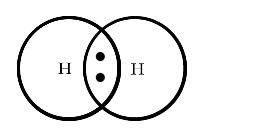
The dots represent Shared Electrons. So now both of the Hydrogen atoms have 2 electrons in there outer shell and are stable.
Example: Methane (CH(little4).
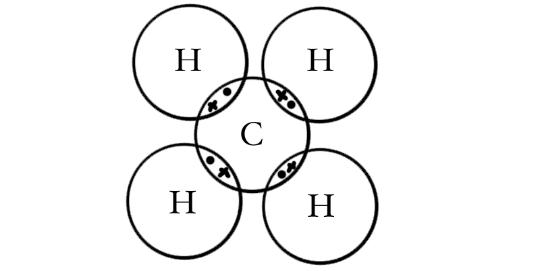
The crosses represent electrons from the Carbon atom and the dots represent electrons from the Hydrogen(s). As you can see the hydrogen(s) have a full outer shell by sharing electrons with the carbon, and the carbon has a full outer shell from sharing with each hydrogen.
Giant Covalent Bonding.
Some covalently bonded molecules do not share the properties of simply covalently bonded atoms. Such as carbon, they can covalently bond in large numbers, this is called Giant Covalent Bonding. When Carbon covalently bonds with only other carbons, the huge structure creates diamond. Silicon and Graphite are other examples of Giant covalent bonding.
Atoms that are formed with giant covalent bonding do so because of the number of atoms in the outer shell, for example carbon need 4 electrons to complete its outer shell therefore makes 4 bonds to other carbon atoms, so each carbon atom will be bonded to another 4 carbon atoms creating huge structures.
